BALI - Can all criminal cases in Indonesia be resolved through an amicable settlement? What happens when an alleged offense occurs under the old Criminal Code but the legal proceedings continue after the new Criminal Code comes into force?
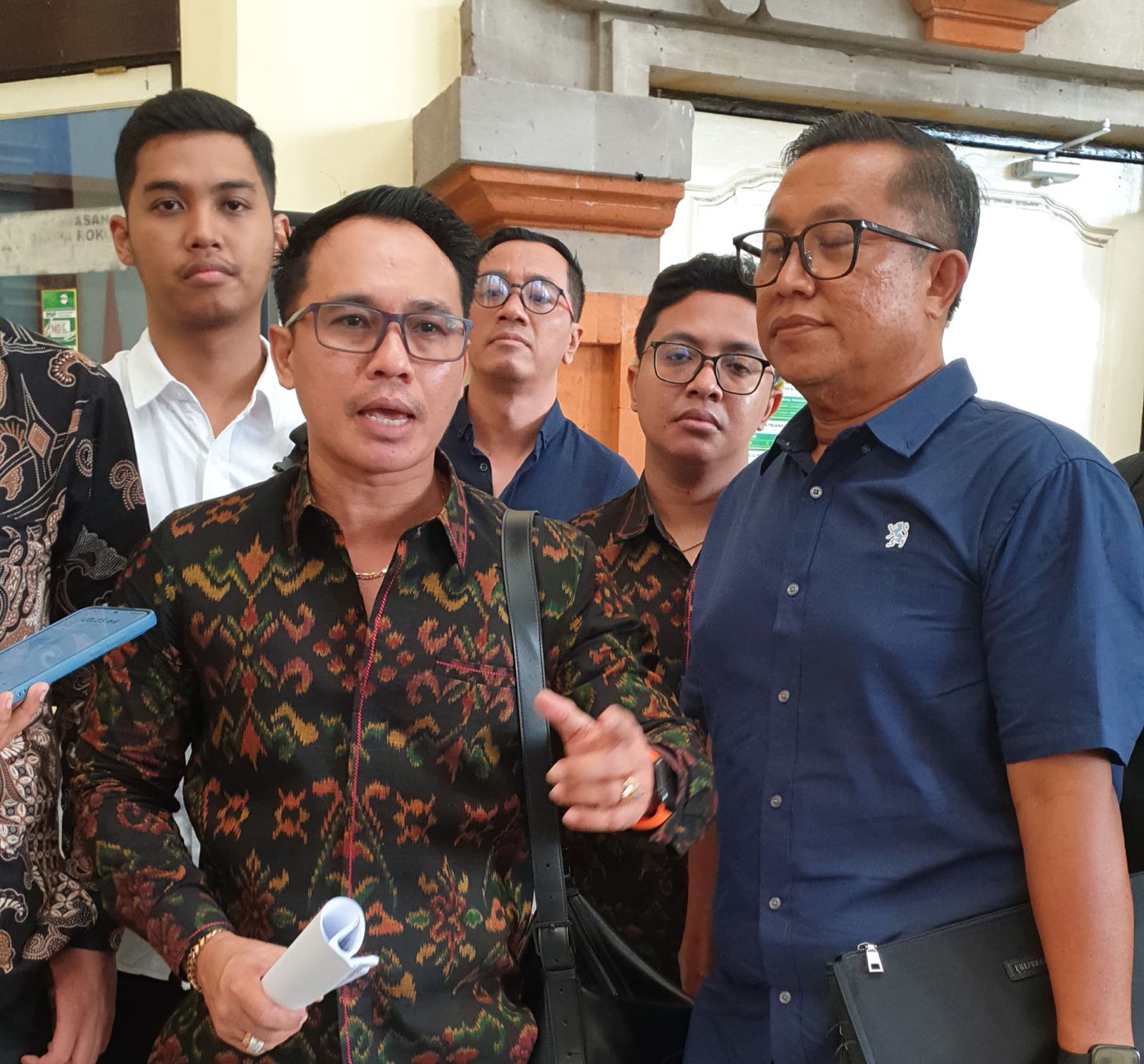
These questions were among the key topics discussed by Denpasar Police Chief Kombes Pol. I Wayan Winaya, S.I.K., M.H., during a meeting with journalists at the monthly #NgopiSantuy discussion organized by the Bali Provincial chapter of the Indonesian Online Journalists Association (IWO), on Saturday (October 31, 2026), in Denpasar.
During the discussion, Winaya explained several important aspects of criminal law enforcement, including the implementation of Indonesia's new Criminal Code, restorative justice, narcotics eradication, and internal police supervision.
New Criminal Code: Older Cases May Be Subject to More Favorable Provisions
One issue the public needs to understand is how criminal cases are handled when legislation changes.
Winaya explained that when an alleged offense occurred before the new regulations took effect, but the legal proceedings continued after their implementation, authorities must consider the criminal law principle that favors the person involved in the case.
"When there is a transitional legal provision, the criminal law principle is that the more favorable regulation must be applied," Winaya explained.
He also emphasized that investigators do not determine the charges in a case unilaterally.
Before making decisions, police conduct case reviews or special case reviews involving several internal departments, including the Head of Criminal Investigation, the Head of Professional and Security Affairs (Propam), the Head of Supervision, and the investigators handling the case.
This mechanism is intended to ensure that law enforcement decisions are made carefully and in accordance with applicable legal provisions.
Not Every Criminal Case Can Be Settled Through Restorative Justice
Another important issue discussed was restorative justice, an approach that emphasizes restoring conditions and resolving disputes in accordance with applicable legal requirements.
Winaya stressed that not every criminal offense can be resolved through an amicable settlement.
Each type of case has its own procedures and Standard Operating Procedures (SOPs).
"Restorative justice, which means restoring conditions to their original state, has specific SOPs for each type of case," he said.
He cited narcotics offenses, physical altercations, and assault cases as examples of offenses that require different handling procedures.
This means that an agreement between the parties involved does not automatically result in the termination of criminal proceedings. Any resolution must remain within the limits established by law.
Bali's Traditional Village Regulations Recognized as Living Law
Winaya also discussed the concept of living law, or laws that develop and exist within local communities, as provided for under Law No. 1 of 2023 concerning Indonesia's Criminal Code.
In Bali, one example is awig-awig, the traditional regulations governing customary villages.
According to Winaya, customary laws may be considered as part of efforts to maintain public order and security, provided they are consistent with applicable national legal provisions.
"There are limitations, and each has its own SOP," he emphasized.
Narcotics Remain a Major Concern for Public Security in Denpasar
Combating narcotics trafficking was another key issue raised during the discussion.
Winaya said narcotics distribution remains one of the factors that can threaten public security and order, commonly referred to by Indonesian police as Harkamtibmas.
"One of the factors disrupting public security and order is narcotics. Naturally, we must also focus on addressing this issue," he said.
He revealed that Denpasar Police had uncovered more than six narcotics-related cases.
However, he asked the public and media organizations to wait for the official announcement, which will be held simultaneously with other police precincts in accordance with directives from the Bali Regional Police.
He clarified that coordinating the announcement schedule does not mean the police are withholding information from the public. Rather, it is part of the institution's established coordination procedures.
Who Handles Police Officers Who Abuse Their Authority?
Internal police supervision was also discussed during the meeting.
Winaya explained that the Professional and Security Affairs Division (Propam) is responsible for monitoring police officers' conduct and performance, including cases involving alleged abuse of authority.
"When an officer commits misconduct or misuses their authority, the Propam Division is responsible for handling it," he said.
The #NgopiSantuy discussion is part of the monthly program initiated by the Bali Provincial chapter of IWO, under the leadership of its chairperson, Tri Widiyanti.
The event was attended by representatives of the IWO Denpasar City chapter, the IWO Badung Regency chapter, and members of the Bali Provincial organization.
Through this forum, IWO Bali provides journalists with an opportunity to engage directly with policymakers, raise questions, and explore issues that matter to the public.
IWO Bali hopes that #NgopiSantuy will continue to serve as an open communication platform between journalists and public officials, encouraging transparency and ensuring that strategic issues affecting Bali are communicated to the public accurately, objectively, and informatively.